
An increasing number of peptides and proteins are being recognised as valuable medicines. With the help of modern technology, we have gone from having to extract them from animals and other humans to being able to manufacture them, reliably and on a large scale, with improved quality control. This article will explain why medicine adopted these new methods of manufacturing, as well as what the most common methods are and their differences.
Why Do We Use Recombinant or Synthetic Peptides?
The first ever peptide isolated for medical purposes was insulin. It was extracted from the pancreases of animals such as cows and pigs. This hormone is vitally important for blood glucose control as well as modulating metabolism and electrolyte balance. The ability to isolate insulin meant that people with type 1 diabetes could now manage their disease and patients could live longer than just a few years after developing this condition.
HGH (Human Growth Hormone) is another noteworthy example of a peptide that was originally isolated from cadavers to be used as a treatment for children with severe growth failure. This allowed patients to develop stronger bones, normalise their metabolism, achieve a better body composition and increase their final adult height.
Although insulin from other animals could be used to treat diabetes in humans, growth hormone from animals could not be used in humans. Animal GH is dissimilar enough to HGH that it has no growth-promoting effect in humans. Only human-derived growth hormone can stimulate growth in humans, but sourcing GH from cadavers carries great risk.
Currently, most of the insulin and all of the HGH used for medical treatment are not derived from animals or cadavers. Instead, they are manufactured. Animal-derived insulin was more likely to elicit an immune response, while HGH isolated from cadavers stopped being produced after a batch was contaminated with infectious prions, leading to the development of CJD (Creutzfeldt-Jakob Disease) in over 400 patients.1
Due to the need for a more reliable source of these medicinal peptides, researchers found other ways of manufacturing them.
Solid Phase Peptide Synthesis
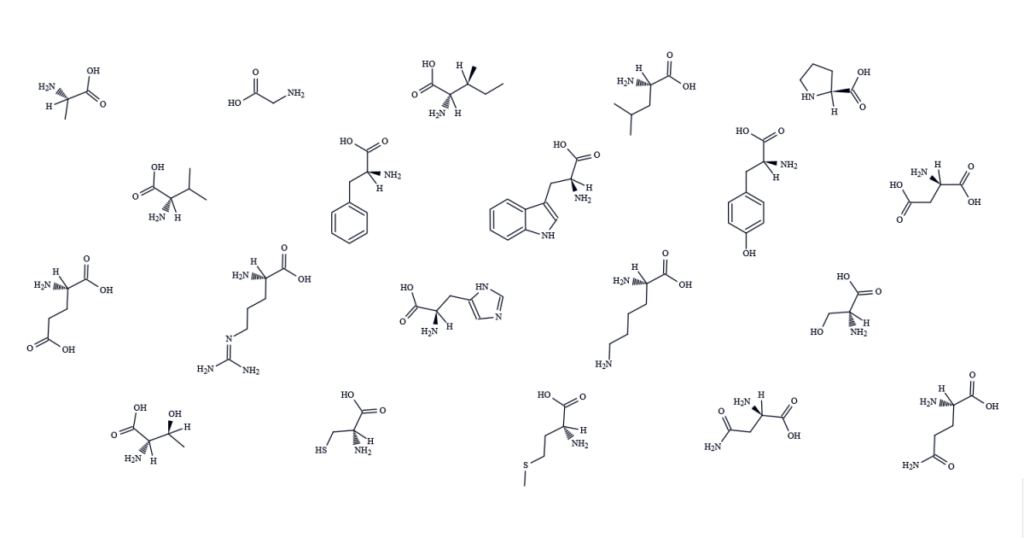
Peptides, polypeptides and proteins are essentially chains of amino acids. The size and complexity of the molecule determine which it is. Peptides are generally between 2 and 50 amino acid residues long, polypeptides are 50 or more amino acids long and proteins can be made up of one or more polypeptide chains. If a molecule is made up of a relatively short and simple chain of amino acids, it is possible to manufacture it by building that chain through a process called solid-phase peptide synthesis (SPPS).
This process involves the use of a resin which has the C-terminal amino acid of the peptide anchored to it. Cycles of deprotection, washing, amino acid coupling and further washing are repeated until the chain is complete. The peptide is then cleaved from the resin before being isolated and precipitated. SPPS can typically produce peptides that are up to 50 residues in length, although methods exist that can produce even longer chains.
Examples of peptides manufactured using SPPS include:
- GHK-Cu
- Selank
- GHRPs 2 and 6
- Fragment 176-191
- Oxytocin
For longer peptides or proteins, a different manufacturing method utilising recombinant bacteria is adopted.
Bacterial Protein Expression
While SPPS can be used to manufacture peptides, recombinant bacteria can be used to produce much larger chains. The process of manufacturing proteins or polypeptides using recombinant bacteria involves first isolating the gene that will be expressed. This gene is inserted into a plasmid that can be expressed by the bacteria. The bacteria then undergo a process called transformation, where the plasmid is taken up by the bacteria. At this point, the bacteria that have taken up the plasmid are now able to express this new gene and will produce the protein encoded by the plasmid. The last step in this process is the harvesting of the target protein, where the bacteria are collected, broken apart and the released protein is purified.
Examples of proteins and peptides that are manufactured with the use of recombinant bacteria include:
- HGH
- Human insulin
- Glucagon-like peptide-1 (GLP-1)
- Insulin-like growth factor-1 (IGF-1)
Sometimes, if a hormone has been manufactured using this technology, a lowercase “r” precedes the hormone’s name to indicate that it is recombinant, for example, rHGH (or rhGH).
E. coli is the most commonly used bacterium for recombinant expression, yet most people associate it with GI infection. It is worth noting that not all strains of E. coli are pathogenic and it is these non-pathogenic strains that are used for manufacturing proteins. The purification process removes any endotoxins that the bacteria may have produced, as well as any bacterial proteins.
There are some proteins for which either SPPS or expression by bacteria could both be used for manufacturing purposes, but there are drawbacks to using an inappropriate method. When performing SPPS, longer peptides or proteins can aggregate, resulting in lowered yields. When short peptides are expressed by bacteria, they are prone to degradation or can harm the bacteria that express them.
A Comparison of the Techniques
From a manufacturing standpoint, the main differences between these two techniques are:
- Time: SPPS is fast, with some batches of peptides being able to be manufactured within hours, while recombinant bacteria take days to grow. The initial setup for recombinant bacterial expression also takes more time, as the target gene must be cloned, and the plasmid needs to be designed before the bacteria are transformed and ready to be cultured.
- Cost: On a large scale, the use of recombinant bacteria to manufacture proteins is a cheaper option due to the low cost of bacterial culture medium, whereas SPPS requires synthetic amino acids and solvents.
- Chain length and product: SPPS can reliably produce chains of up to 50 amino acids in length, while recombinant bacteria can produce much larger proteins or polypeptides and perform certain post-translational modifications (PTMs) that are necessary for activity. SPPS enables the incorporation of D-amino acids and allows custom modifications. The use of D-amino acids makes peptides more resistant to enzymatic degradation and may be less immunogenic. Recombinant bacteria can only incorporate natural amino acids into chains.
Future Possibilities for the Manufacturing of Peptides and Proteins
Although these are the main ways by which peptides and proteins are manufactured, other ways are being used and developed, such as:
- Plant molecular farming: Plants are genetically modified to express foreign proteins which can then be harvested.2 This is a highly scalable option with a relatively low cost that can produce complex proteins in specific tissues.
- Mammalian cell culture: Using mammalian cells for the expression of proteins allows the production of proteins with post-translational modifications (PTMs) that bacteria are unable to perform. Many proteins, such as insulin, rely on PTMs to function correctly. When insulin is expressed by bacteria, it must be further processed before the active hormone is obtained. Using mammalian cells eliminates the need for this extra step.3
- Protein expression in milk: Recombinant proteins such as antithrombin III, lactoferrin and fibrinogen have been expressed in the milk of transgenic animals.4 This option offers high yields of proteins requiring PTMs.
Conclusion
SPPS and recombinant bacteria are widely used to manufacture peptides and proteins used for medicines. They provide us with a reliable way to produce these medicines on a large scale without the risk of transmitting disease and lowering the risk of triggering an immune response. With the use of mammalian cell lines, we can express even more complex proteins requiring post-translational modifications that bacterial hosts are incapable of doing, while plants and transgenic animals offer their own sets of unique benefits.
References
- Brown P, Brandel JP, Preece M, Sato T. Iatrogenic Creutzfeldt-Jakob disease: the waning of an era. Neurology. 2006;67(3):389-393. doi:10.1212/01.wnl.0000231528.65069.3f
- Shanmugaraj B, I. Bulaon CJ, Phoolcharoen W. Plant Molecular Farming: A Viable Platform for Recombinant Biopharmaceutical Production. Plants. 2020;9(7):842. doi:10.3390/plants9070842
- Bryan L, Clynes M, Meleady P. The emerging role of cellular post-translational modifications in modulating growth and productivity of recombinant Chinese hamster ovary cells. Biotechnol Adv. 2021;49:107757. doi:10.1016/j.biotechadv.2021.107757
- Meade HM, Echelard Y, Ziomek CA, et al. EXPRESSION OF RECOMBINANT PROTEINS IN THE MILK OF TRANSGENIC ANIMALS. In: Gene Expression Systems. Elsevier; 1999:399-427. doi:10.1016/B978-012253840-7/50015-8