
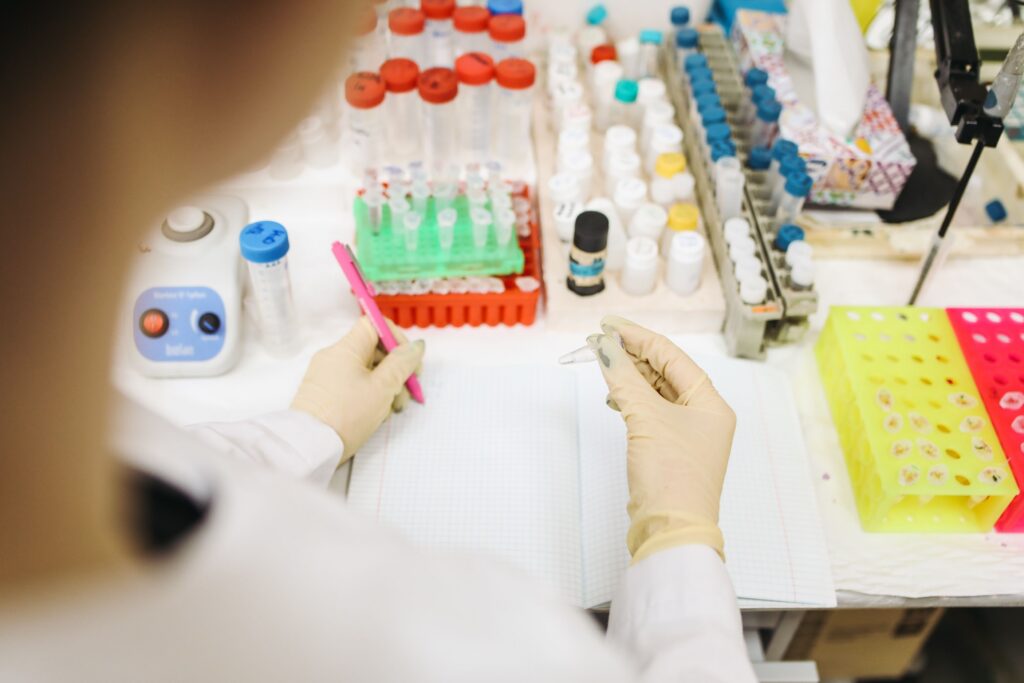
If you have been intrigued by the increasing noise around peptides, then this will be an exciting development. In July 2026, a U.S. Food and Drug Administration (FDA) advisory committee had a meeting and made recommendations that could authorise access to six popular peptides that are currently available through a regulatory grey market. 1
While these recommendations don’t yet constitute FDA approval, they are a pivotal step towards potentially authorising these compounds for human use. These peptides have gained significant attention in wellness circles for how they promote healing and support the body’s natural processes.
Understanding the Current Regulations
Peptides are short chains of amino acids that naturally occur throughout the body, helping regulate functions related to metabolism, immunity, hormone production, and sleep.2 While the FDA has approved several peptide medications that you would have heard of, including GLP-1 receptor agonists for obesity and diabetes, such as semaglutide, the peptides discussed by the advisory committee lack formal FDA approval and have limited evidence supporting their safety and effectiveness.3
These six peptides were previously on the FDA’s “Category 2” list, which flags compounding substances as having significant safety risks. They were removed from this list in April 2026 to allow for the Pharmacy Compounding Advisory Committee’s (PCAC) evaluation.4. The committee’s recommendations, if adopted by the FDA, could add these substances to the 503A Bulks List. This is a list of compounds that licensed compounding pharmacies may use to prepare customised medications with valid prescriptions.1
The Six Peptides Under FDA Consideration
1. BPC-157 (Body Protection Compound-157)
BPC-157 has received significant attention in sports medicine, wellness and orthopaedic circles for its reported musculoskeletal healing properties. Studies on BPC-157 has reported it’s ability to promote tissue repair, gut lining health, and tendon and ligament recovery.5
Current Evidence:
Currently, the vast majority of the supporting evidence comes from laboratory studies and animal testing, with a notable lack of clinical human trials. The advisory committee largely discussed its potential use in the treatment of ulcerative colitis, although clinical validation is still limited. 5
Expert Perspective: “It has a substantial body of promising preclinical research, but that has not yet translated into robust clinical evidence in humans,” notes molecular scientist Dr. Nora Khaldi, founder of biotechnology company Nuritas.1
2. KPV (Lys-Pro-Val)
KPV is a tripeptide, meaning that it is made up of three specific amino acids. It has shown promise in early laboratory and animal studies for its potential anti-inflammatory properties, particularly concerning skin and gut health.6
Current Evidence: Although KPV has undergone a large amount of laboratory studies and some animal testing too, the ideal human clinical data is lacking. The advisory committee discussed potential applications for wound healing and inflammatory conditions including eczema and inflammatory bowel disease, although robust clinical data is lacking.6
Potential Applications: Early research suggests KPV may help mitigate oxidative stress and modulate inflammatory pathways, but translation to clinical practice requires further investigation.
3. TB-500 (Thymosin Beta-4)
If TB-500 were to be approved, it would be primarily for muscle recovery, flexibility enhancement, and connective tissue repair. It does appear on the World Anti-Doping Agency’s prohibited substances list, reflecting concerns about its use in competitive athletics and whether its use provides a competitive advantage.7
Current Evidence: As with most peptides, TB-500’s benefits are predominantly limited to animal and lab-based preclinical research. Only a few well-designed human studies have examined whether the peptide can safely improve wound healing and promote sports recovery.7
Safety Considerations: The peptide’s inclusion on anti-doping lists underscores the need for careful medical supervision if it becomes more widely available.
4. MOTS-c
MOTS-c is a mitochondrial-derived peptide often marketed for weight loss, healthy ageing, and exercise performance enhancement. It has attracted scientific interest for its role in cellular metabolism.8
Current Evidence: The advisory committee focused on laboratory studies suggesting MOTS-c might help treat both obesity and osteoporosis simultaneously. However, very little evidence from human trials supports its safe, effective use for these conditions.8
Expert Caution: “MOTS-c has attracted considerable scientific interest because of its role in metabolism, and early human studies have begun, but there is currently insufficient evidence to support its use for obesity or osteoporosis,” Dr. Khaldi explains.1
5. Semax
Semax is already approved for human use in Russia and is commonly promoted for cognitive health and mood enhancement. However, in Western research, the information on its effectiveness and safety remains sparse.9
Current Evidence: There is only limited research from Western scientists so far, who have been examining Semax’s potential as a treatment for migraines and other neurological conditions. Its regulatory approval in Russia doesn’t automatically translate to validation by Western medical standards,9 but it does boost hopes that it could soon be approved.
Clinical Applications: Proponents suggest benefits for cerebral ischemia and cognitive function, but rigorous, large-scale clinical trials are needed to substantiate these claims.
6. Epitalon
Epitalon is marketed primarily for longevity and sleep improvement. Interest in this peptide stems largely from its potential effects on cellular ageing, though as with the others, human evidence remains limited.10
Current Evidence: Research supporting Epitalon’s anti-ageing properties comes predominantly from laboratory and animal studies. There is not enough comprehensive human evidence to demonstrate that it effectively slows ageing or improves insomnia.10
Longevity Claims: While there is eager enthusiasm in longevity circles for epitalon, the gap between preclinical promise and clinical validation remains substantial.
What Happens Next?
The advisory committee’s recommendations are not binding, and the FDA retains full authority to accept, modify, or reject them.11 If the agency adopts the recommendations, these peptides could become more widely available through licensed compounding pharmacies, though they would still require prescriptions and would not be sold over the counter.3
Important Distinction: Greater accessibility should not be confused with scientific validation. “A peptide becoming more widely available does not mean it has been shown to be safe and effective through the FDA drug approval process,” Dr Khaldi emphasises. “Those questions require a different level of scientific evidence.”1
Critical Considerations for Patients
The biggest concern about these unregulated peptides is the lack of adequate human clinical evidence for the uses they are being marketed for. Healthcare experts universally recommend that anyone considering peptide therapy should consult with a qualified healthcare provider before starting treatment.
The Path Forward
The FDA is expected to issue final decisions on the advisory committee’s recommendations in the coming months. Additional peptides, including GHK-Cu, Melanotan II, and others, are scheduled for review before the end of February 2027.4
While expanded access to these peptides may benefit some patients under proper medical supervision, the scientific community emphasises the need for robust clinical research.
The potential approval of these six peptides is a significant development in the future of regenerative medicine and wellness therapy. As the FDA continues its evaluation process, the focus must remain on patient safety, thorough research, and transparent medical reporting.
References
- U.S. Food and Drug Administration. July 23–24, 2026: Meeting of the Pharmacy Compounding Advisory Committee [Internet]. Silver Spring (MD): FDA; 2026 Jul 23-24 [cited 2026 Oct 7]. Available from: https://www.fda.gov
- Taylor M. Peptides: What they are, potential benefits, and safety concerns [Internet]. Boston (MA): Harvard Health Publishing; 2026 Jul 7 [cited 2026 Oct 7]. Available from: https://www.health.harvard.edu
- U.S. Food and Drug Administration. Compounding and the FDA: Questions and answers [Internet]. Silver Spring (MD): FDA; 2025 Sep 16 [cited 2026 Oct 7]. Available from: https://www.fda.gov
- U.S. Food and Drug Administration. Certain bulk drug substances for use in compounding that may present significant safety risks [Internet]. Silver Spring (MD): FDA; 2026 Apr 22 [cited 2026 Oct 7]. Available from: https://www.fda.gov
- Vasireddi N, Patel KR, Nashed D, Azad A, Gowda A, Khodamoradi K, et al. Emerging use of BPC-157 in orthopaedic sports medicine: a systematic review. HSS J. 2025 Sep 16;21(3):345-56.
- Sung J, Kim Y, Park S, Lee H. Lysine-proline-valine peptide mitigates fine dust-induced keratinocyte apoptosis and inflammation by regulating oxidative stress and modulating the MPK/NF-KB pathway. Tissue Cell. 2025 Aug;70:102087.
- Maar K, Heyde BR, Maqoud F, Vennekens R, Segal A, Rouschop KMA, et al. Utilizing developmentally essential secreted peptides such as thymosin beta-4 to remind the adult organs of their embryonic state—new directions in anti-aging regenerative therapies. Cells. 2021 May 28;10(6):1343.
- Zheng Y, Liu Y, Jin H, Pan S, Qian L. MOTS-c: a promising mitochondrial-derived peptide for therapeutic exploitation. Front Endocrinol (Lausanne). 2023 Jan 25;14:1120533.
- Sciacca MFM, Romanucci V, Zarrelli A, Monaco I, Lolicato F, Spinella N, et al. Semax, a synthetic regulatory peptide, affects copper-induced Aβ aggregation and amyloid formation in artificial membrane models. ACS Chem Neurosci. 2022 Jan 26;13(2):225-36.
- Khavinson V, Linkova N, Dyatlova A, Kuznik B, Umnov R. Peptides: prospects for use in the treatment of COVID-19. Molecules. 2020 Sep 11;25(18):4389.
- Kanter GP. The real question the FDA is asking its advisory committees. JAMA Health Forum. 2023 Jul 7;4(7):e231806.